Digital Twin Development Services

We build digital twins that model your real-world operations, predict what happens next, and let you test changes before they reach the physical environment. 7+ enterprise twins delivered across energy, smart cities, healthcare, and manufacturing, backed by 15+ years of engineering across AI, IoT, data, and cloud.

Get a Twin Scoping Session
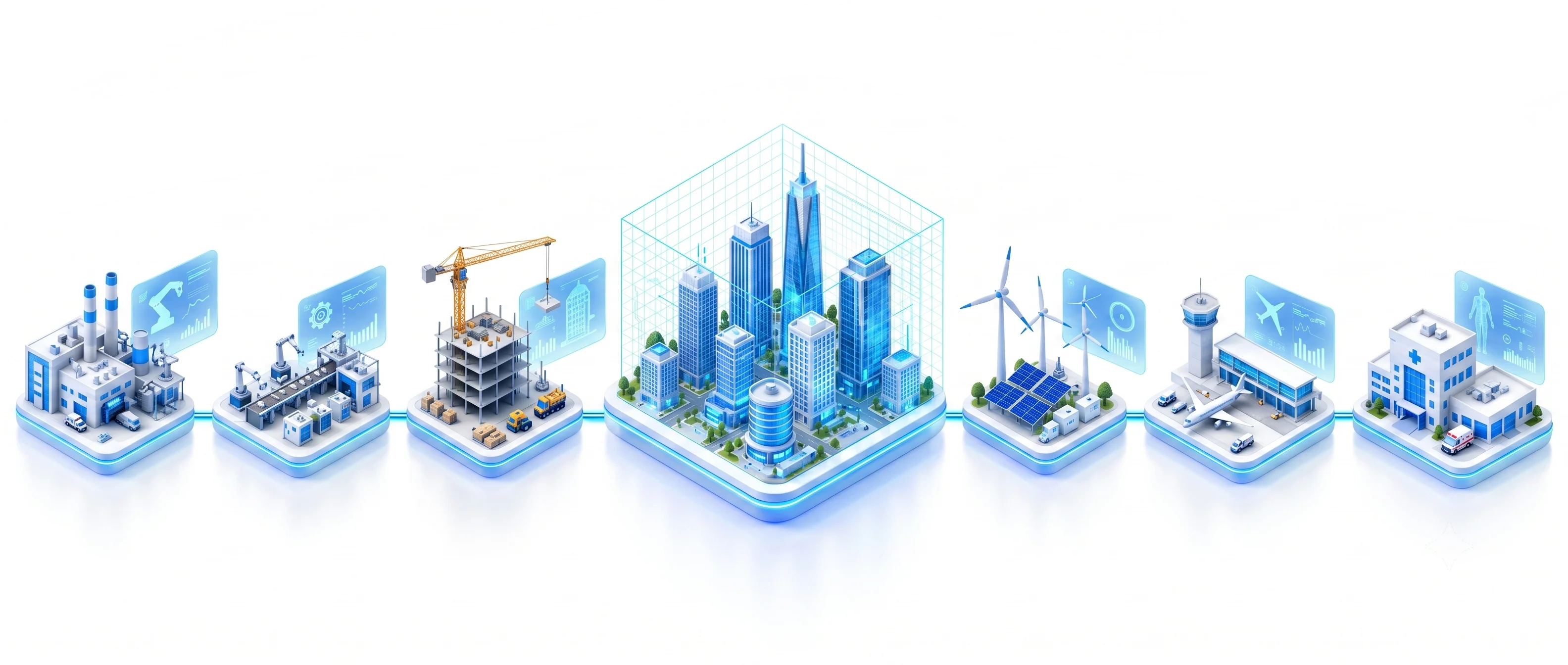
Digital Twin Development Services
15+
Years of technology engineering experience
40+
Industries served
7+
Digital Twins Delivered
40%
Average time reduction in planning
50+
In-house digital twin specialists
ISO 27001:2022
ISO 23247
SOC 2 Type II
HIPAA
ISO 9001:2015
GDPR

Operational Challenges Our Digital Twin Services Solve

A digital twin project should begin with an operational problem. We help enterprises use digital twins to address problems such as:

Unplanned Downtime

A single unplanned equipment failure can cascade into millions in lost output. We connect live telemetry from PLCs, SCADA, and IoT devices into digital twin models that detect anomalies early, predict component degradation, and provide maintenance alerts before failure occurs.

Limited Operational Visibility

When asset and process data live in disconnected systems, leaders make decisions based on outdated reports. We unite asset, process, spatial, and environmental data into a single digital twin model that provides a live operational view across facilities.

Energy Cost and Waste

Energy consumption patterns are usually visible only after utility bills arrive. We build digital twin models that track consumption in real time against production, weather, and operational schedules to uncover optimization opportunities.

Expensive Physical Experimentations

Testing a layout, staffing model, control sequence, or expansion on a live facility introduces risk and downtime. A digital twin gives your team a virtual environment to model scenarios, stress-test changes, and validate return on investment before physical changes are made.

Fragmented Data Across Systems

ERP, MES, SCADA, and IoT platforms rarely share a unified data context. We design data pipelines that connect fragmented operational sources into a single schema for simulation, analytics, and operational applications.

Our Proven Digital Twin Engineering in Real-World Environments

Revolutionizing Smart City Planning with Digital Twins

We built a digital twin solution leveraging real-time data and advanced visualization to help a leading urban city development company create sustainable and adaptable city models.

Unreal Engine DevelopmentDigital Twin ServicesData Engineering
Outcomes:
34%
Faster Incident Detection
27%
Fewer Maintenance Events
43%
Improved Cross-Department Visibility

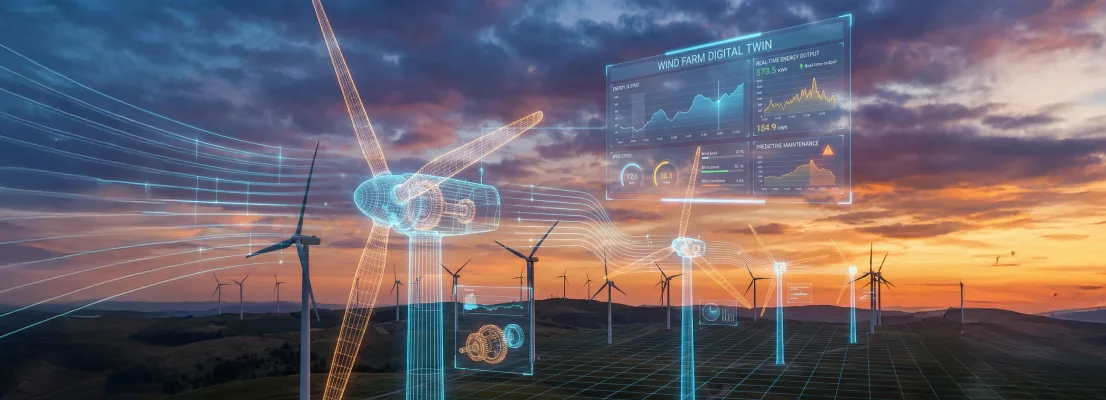
Accelerated Wind Farm Planning By 35% Through Digital Twin Solutions

We built a high-fidelity wind farm digital twin that enabled renewable energy planners to simulate turbine layouts, improve energy forecasting, validate feasibility, and estimate ROI before capital investment decisions.
Digital Twin SolutionUnreal Engine DevelopmentAI Development
Outcomes:
3x
Faster Capex Decisions
40%
Reduced Feasibility Planning Time
35%
Reduced Wind Farm Planning Time

Transformed Solar Planning with Digital Twins

We built a solar planning platform in Unreal Engine with real-time ROI forecasts, shadow and weather simulations, and immersive 3D visualization to enable faster, smarter solar investment decisions.

Unreal Engine DevelopmentDigital Twin Services
Outcomes:
32%
Increase in Energy Output Efficiency
58%
Faster Issue Detection & Response
45%
Reduction in Overall Maintenance Costs

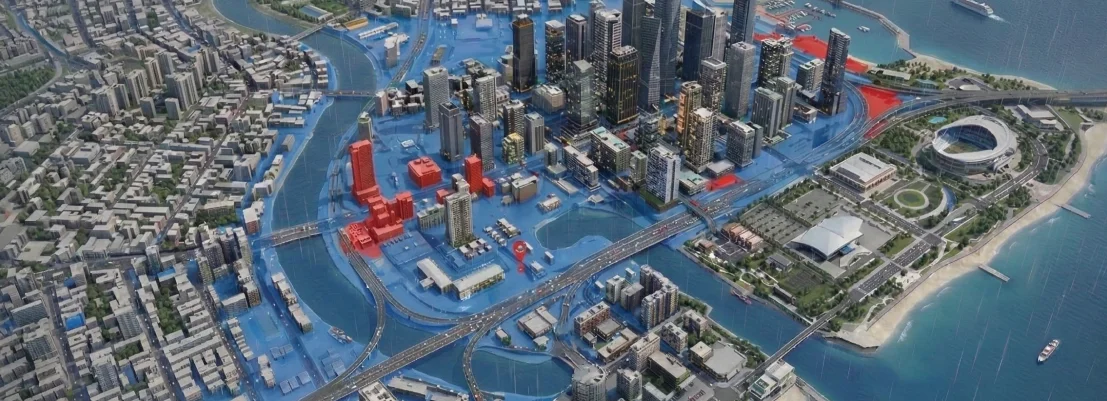
Flood Simulation for Rescue Operations

We created a digital twin for flood simulation, enabling administrators to respond swiftly and plan effectively for unforeseen flooding scenarios.
SimulationPredictive MaintenanceReal-Time Rendering
Outcomes:
3X
Times Better Rescue Planning
50%
Reduction in Operation Costs
30X
Faster Adoptability

Let’s Assess Your Digital Twin Opportunity!

Our consultants will help you identify where a digital twin can create measurable operational and business value.

Connect Your Digital Twin with the Systems You Already Use

We help you connect real-world assets, operational systems, enterprise applications, and data platforms to create a unified digital twin environment.

IoT & Sensors

Capture real-world data from connected assets and environments.

PLCs & SCADA

Connect industrial control and supervisory systems with the digital twin environment.

MES

Bring production data and process context into the twin.

Data Historians

Connect historical and time-series operational data for analysis, simulation, and predictive modeling.

PLM

Leverage product lifecycle and engineering information.

CMMS & EAM

Connect asset records, maintenance history, work orders, inspections, and service schedules.

BIM & GIS

Bring spatial, building, infrastructure, and asset information into the digital environment.

Cloud & Data Platforms

Build scalable data pipelines and processing environments.

Legacy Applications

Create integration layers around existing systems (like ERP) rather than requiring disruptive replacement.

Digital Twin Engines We Use

As a digital twin solution provider company, we use proven platforms to build scalable, real-time digital twins that deliver accurate simulations, seamless data integration, and actionable operational insights.

Unreal Engine

Unreal Engine

Being an experienced Unreal Engine development company, we build high-fidelity, real-time digital twin environments for large-scale systems and complex simulations. It enables immersive visualization, real-time data interaction, and performance at scale when visual accuracy and realism matter.

Unity

Unity

Hire Unity developers from us who can build flexible, lightweight digital twin experiences suited for cross-platform access and interactive simulations. It supports rapid iteration, broader device compatibility, and efficiency visualization for operational and training-focused use cases.

NVIDIA Omniverse

NVIDIA Omniverse

As the top trusted digital twin solutions company, we use NVIDIA Omniverse to enable real-time collaboration, physics-accurate simulation, and data interoperability across digital twin workflows. It supports multi-source integration and advanced simulation for complex, data-intensive environments.

How We Approach Digital Twin Development Projects

With in-house team of unity, NVIDIA omniverse, and unreal engine developers, data engineers, and AI/ML experts, we have our own process to develop digital twin solutions. Our 6-step digital twin development process includes:

Step 1

Understand the Physical System

Define the business decision, physical system, operating conditions, and parameters that matter.

Step 2

Map Data & Integration

Identify data sources (PLCs, SCADA, MES, PLM, etc.), assess readiness, and define integration, security, and connectivity requirements.

Step 3

Design the Architecture

Design the twin across connectivity, edge, data, AI, simulation, applications, and enterprise systems.

Step 4

Build the Digital Twin

Create the digital model using Unity, Unreal Engine, or NVIDIA Omniverse, data relationships, and interfaces, then add AI, ML, simulation, and optimization.

Step 5

Validate & Integrate

Validate the twin against real-world data and connect it with the tools and workflows your teams already use.

Step 6

Scale Across Operations

Extend the proven twin architecture across more assets, processes, facilities, or business units.

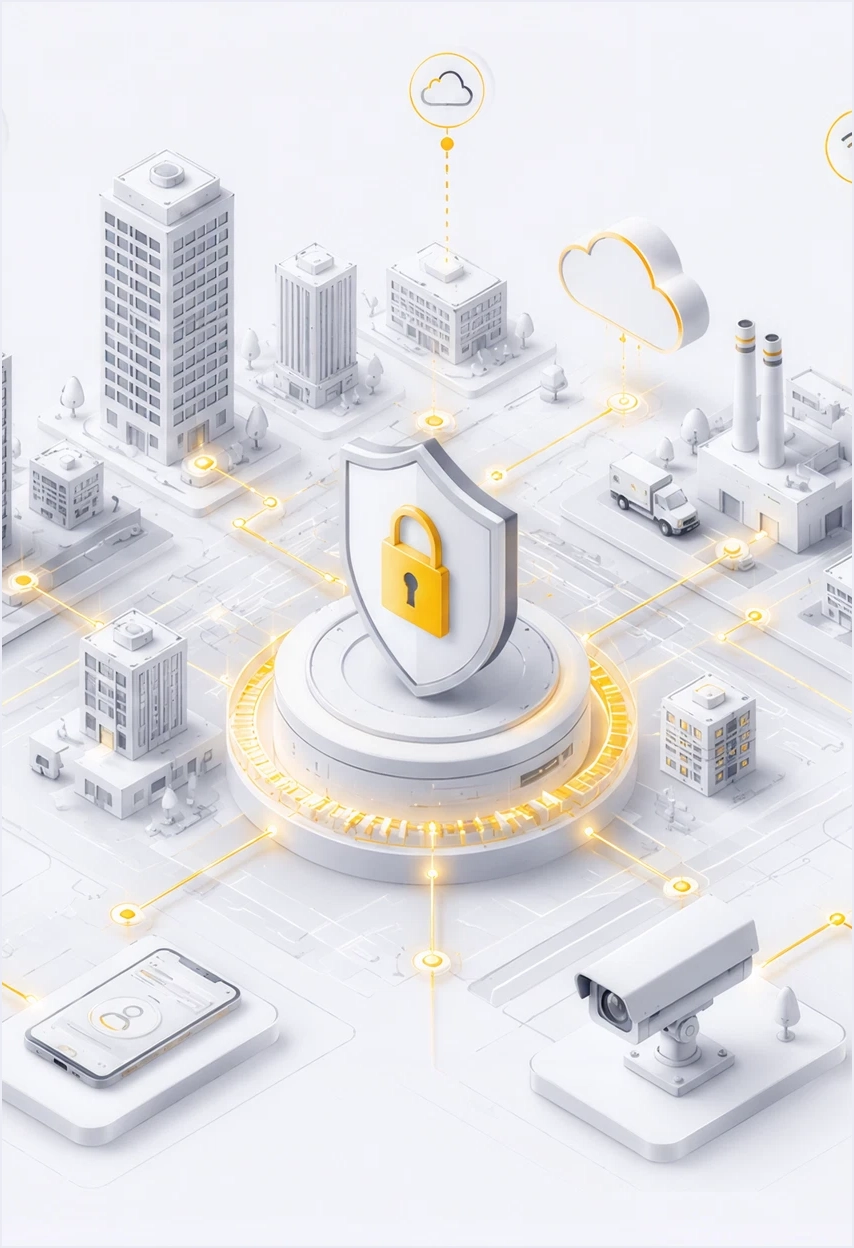
Security Precautions We Take To Ensure Digital Twin Model Is Reliable

At MaxLevels, we integrate security considerations into architecture, development, testing, deployment, and maintenance. Our ISO 27001:2022, ISO 9001:2015, and SOC 2 Type II credentials support the practices that keep your digital twin secure and reliable in an operational environment.

Identity & Access Management

Implement RBAC and necessary controls to ensure who can access twin data, models, applications, APIs, & operational capabilities.

Secure APIs & Integrations

Protect communication between the digital twin, enterprise systems, IoT platforms, and external services.

Monitoring & Auditability

Maintain appropriate logging and monitoring to support security visibility and investigation.
Security Precautions

Device & Connectivity Security

Account for the security of connected devices, gateways, edge environments, & operational networks.

Data Protection

Protect sensitive data during transmission, processing, and storage using appropriate security controls.

Network Isolation

Apply appropriate segmentation and access boundaries between operational technology, enterprise systems, and digital environments.

What You Can Expect At the End of Your Digital Twin Project

We deliver the components required to move from concept to a production-ready digital twin environment.

01

Business Foundation

  • A measurable business case and KPI baseline
  • Complete data and asset inventory
  • Documented architecture and integration design
02

Production-Ready Twin

  • Working data pipelines with quality controls
  • Version-controlled digital models
  • Validated outputs with agreed accuracy thresholds
  • Security, governance, and compliance documentation
03

Operational Handover

  • User dashboards and operational workflows
  • Training, runbooks, and support procedures
  • Production-readiness and handover reports
04

Continuous Value

  • Post-deployment monitoring plan
  • Model-maintenance and retaining process
  • Benefit-realization schedule
  • Enhancement and retirement roadmap

Delivering Outcomes That Matter

  • Unified view of operations
  • Data-driven insights
  • Predictive and prescriptive intelligence
  • Faster, confident decisions
  • Measurable business impact

Post-Deployment Digital Twin Support You Can Expect From MaxLevels

We have seen that with time data, models, integrations, infrastructure, and business requirements can change after deployment. Our post-deployment support cover:

Monitoring

Monitor the health and availability of the digital twin environment.

Model Updates

Update digital models as physical assets, processes, or operating conditions evolve.

Data Quality

Identify and address issues affecting the quality, freshness, or availability of twin data.

Performance Monitoring

Track system performance and optimize infrastructure and processing as usage grows.

Security Updates

Address security updates, vulnerabilities, access requirements, and evolving security needs.

AI Model Maintenance

Monitor predictive models and update or retrain them when performance or underlying data patterns change.

Feature Enhancements

Extend the twin as business requirements evolve.

Integration Maintenance

Maintain connections with enterprise systems, IoT platforms, APIs, and other data sources.

Scaling

Expand infrastructure, data processing, models, and applications as the twin ecosystem grows.

Technical Support

Provide ongoing engineering support to keep the solution operational and evolving.

Why Trust MaxLevels As Your Digital Twin Development Company

As a trusted digital twin development partner in Jordan, USA, and globally, MaxLevels helps organizations bridge the gap between physical operations and digital intelligence. Our proficiency with Unity, Unreal Engine & NVIDIA Omniverse platforms, and expertise in AI, IoT, and simulation engineering enables us to deliver scalable digital twins catering to real-world business needs.

Simulation-First Mindset

We build behavior-driven digital twins focused on real-world simulation rather than surface-level visualization, backed by delivery of 7+ digital twin projects across operational & planning use cases.

Strong Unreal Engine and NVIDIA Omniverse Expertise

Our team brings hands-on experience using Unreal Engine, NVIDIA Omniverse, and Cesium to engineer high-fidelity, real-time digital twin environments at asset, system, and city scale.

Proven Smart City and Large-Scale Deployments

We have delivered city digital twins supporting infrastructure mapping, emergency simulations, mobility modeling, and civic data layers for both government and enterprise environments.

Rapid Prototyping Capability

Our modular architecture and in-house engineering teams enable us to deliver functional digital twin MVPs within 2 to 6 weeks for faster validation and stakeholder alignment.

Enterprise and Government Delivery Experience

We execute digital twin initiatives across enterprise and public-sector contexts while aligning with compliance, scalability, data governance, and long-term operational needs.

Multidisciplinary Engineering Team

The digital twin solutions by MaxLevels are built by integrated teams spanning 3D engineering, data pipelines, AI and ML, IoT systems, and cloud architecture to ensure end-to-end ownership.

Scalable and Future-Ready Architecture

From single assets to city-wide ecosystems, we design digital twin architectures that expand in scope, intelligence, and scale as operational complexity grows.

Ready to Identify Where a Digital Twin Can Create Real Business Value?

In a Twin Scoping Session, we can help you assess the use case, data readiness, integration landscape, and more to deliver scalable implementation.

FAQs on Digital Twin Services

Here we have tried to solve the most common queries that businesses have while looking for digital twin solutions and services, and their answers by our experts.

We support and work across multiple engines and platforms, including Unity, Unreal Engine, NVIDIA Omniverse, and cloud-native digital twin platforms. Our approach is platform-agnostic, allowing us to align the technology stack with your operational, visualization, and integration requirements rather than forcing a predefined toolset.

Yes. We regularly develop digital twins on client-preferred engines, platforms, or ecosystems. Our teams adapt to existing technology environments, whether it’s a specific visualization engine, cloud platform, or industrial system, ensuring seamless alignment with your current architecture.

We design and integrate real-time data pipelines using IoT sensors, edge systems, APIs, and enterprise platforms. This includes data ingestion, normalization, validation, and synchronization to ensure the digital twin reflects live system behavior accurately and reliably.

Predictive maintenance models typically leverage a combination of historical data and real-time data. Historical data helps establish behavioral patterns and failure trends, while real-time data continuously refines predictions and enables timely maintenance decisions.

Yes. We deliver digital twin outputs in formats aligned with your operational and deployment needs, including browser-based applications, desktop executables (.exe, .dmg), dashboards, APIs, and immersive AR/VR experiences, ensuring seamless adoption within your existing ecosystem.

We provide cross-platform digital twin delivery across web, desktop, mobile, and immersive environments, including browser-based access, native executables, and AR/VR deployments. This ensures consistent visualization, performance, and interaction across devices and usage contexts.

Digital twins improve operational efficiency by providing real-time insights and predictive analytics, allowing organizations to optimize processes, reduce downtime, and manage resources effectively. By simulating scenarios before implementation, digital twins minimize trial-and-error, streamline workflows, and enable data-driven decisions that boost productivity and lower operational costs.

Industries that benefit the most include manufacturing and industrial automation for predictive maintenance, healthcare for patient monitoring and medical device simulation, energy and utilities for efficient grid and plant management, smart cities for urban planning and infrastructure monitoring, and aerospace or automotive sectors for lifecycle management and performance optimization. Digital twin consulting helps these industries implement tailored, high-impact solutions.

MaxLevels stands out due to its proven experience in delivering 7+ digital twin projects across diverse industries, end-to-end development expertise, and strong capabilities in AI/ML, IoT, edge computing, and data analytics. We ensure compliance with industry standards, provide fully customized solutions integrated with existing systems, and offer ongoing support to help businesses maximize operational efficiency and ROI.

Data security in digital twins is ensured through end-to-end encryption, secure IoT integration, role-based access controls, regular security audits, and anomaly detection systems. These measures protect sensitive operational, industrial, or patient data while maintaining the accuracy and reliability of the digital twin, allowing organizations to confidently monitor and optimize their assets.

Digital twins can model a wide variety of assets and processes, including machines, vehicles, production lines, medical equipment, buildings, industrial workflows, energy distribution systems, smart city infrastructure, and even human-centric applications like patient monitoring or workforce performance. Essentially, any asset or process that can be measured and analyzed can be represented as a digital twin.

Unlike traditional monitoring or simulation tools, digital twins integrate real-time data with predictive and prescriptive analytics, continuously mirroring the physical asset or process. They allow organizations to simulate “what-if” scenarios, detect inefficiencies, and take proactive actions, offering a dynamic, data-driven approach that goes beyond observation or simple predictions.

Creating a functional digital twin involves more than just building a 3D model. It requires a robust platform that can handle real-time data ingestion, integrate with IoT devices, support predictive modeling, and simulate behavior accurately. Specialized platforms and technologies, such as Unreal Engine, Cesium, IoT frameworks, and AI to ensure that the digital twin replicates both the visual and functional aspects of the physical entity in a reliable and scalable way.

If your enterprise relies on physical systems, processes, or infrastructure, a digital twin can bring transformative value. It offers a real-time view of operations, enables proactive issue resolution, and supports data-driven decision-making. Whether you are managing a factory floor, a hospital, a solar plant, or a smart city project, a digital twin empowers you to simulate, predict, and optimize before acting, helping you stay ahead in a world that demands agility and precision.

The cost to develop a digital twin typically ranges from $50,000 to $500,000+, depending on the complexity of the asset being modeled, required data integrations, and real-time analytics capabilities. Simple equipment-level twins cost less, while enterprise-scale twins with IoT integration, simulation, and AI-driven insights require significantly higher investment.